


Live Bottom Trailers: Performance, Applications & Key Considerations
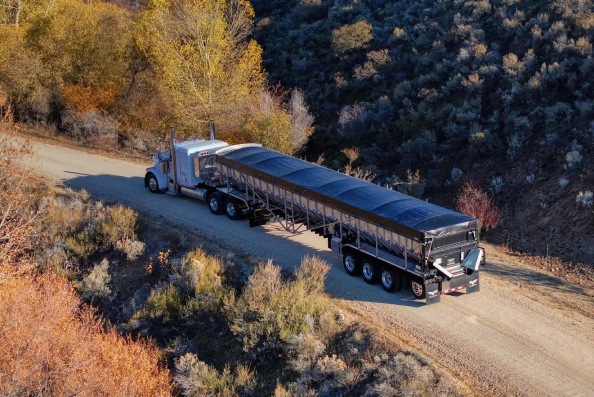
Moving aggregate, asphalt, sand, and other construction materials efficiently is critical to keeping projects on schedule across Western Canada.
At RJames Western Star, we work closely with experienced construction and paving contractors throughout Alberta and British Columbia who need equipment that performs reliably under demanding conditions. For operations focused on payload control, consistent discharge, safety, and cycle-time efficiency, live bottom trailers offer a practical alternative to conventional end-dump configurations.
Why Live Bottom Trailers Continue to Gain Attention?
Live bottom trailers unload material through a hydraulically powered conveyor system rather than raising the trailer body. This low-profile unloading method can reduce the risks associated with overhead power lines, bridges, uneven ground, and confined urban jobsites.
For contractors working in Calgary, Edmonton, Vancouver, Kelowna, or Kamloops, the ability to discharge without elevating the trailer provides greater flexibility around paving equipment, stockpile areas, and restricted-access sites. Operators may also unload while moving forward when the application and site procedures permit, allowing material to be distributed progressively instead of deposited in a single pile.
This configuration does introduce different operating requirements. Hydraulic performance, belt condition, gate settings, payload distribution, and material characteristics all affect how efficiently the trailer unloads.
Payload Management and Trailer Configuration
Maximum trailer volume does not automatically equal maximum legal payload. Aggregate, sand, reclaimed asphalt pavement, and hot-mix asphalt have different bulk densities, so the limiting factor may be gross vehicle weight or axle loading before the trailer reaches its full volumetric capacity.
Experienced fleet managers should evaluate:
- material density and moisture content
- trailer tare weight
- tractor and trailer axle ratings
- legal weight limits along the intended route
- axle spacing and load distribution
- haul distance and expected cycle frequency
Loading the trailer evenly is essential. Concentrated loads can create excessive axle weight, increase structural stress, and affect belt start-up under load. A properly matched trailer should maximize revenue-producing payload without sacrificing durability, compliance, or stability.
Higher-capacity bodies may reduce the number of trips required, but they can also add tare weight and reduce versatility on weight-restricted routes. The most productive specification is therefore not always the trailer with the greatest nominal capacity.
Conveyor Performance and Unloading Rates
Conveyor performance depends on more than belt speed. Hydraulic flow and pressure, belt width, belt tension, floor condition, rear-gate opening, material density, and moisture all influence the discharge rate.
A wider or faster belt may increase unloading capacity, but the receiving equipment must be able to handle the flow. If the trailer discharges faster than a paver hopper, material transfer vehicle, conveyor, or stockpile area can accept it, the operator may need to stop and restart the belt. This can create surging, interrupt paving continuity, and place additional load on the hydraulic system.
Conversely, an undersized or slow conveyor can extend unloading time and reduce the number of completed cycles per shift. Contractors should assess unloading performance based on the entire production system rather than the trailer alone. The ideal rate is one that matches the receiving equipment and keeps material moving without creating bottlenecks.
Operators should also avoid opening the rear gate too aggressively. Coordinating the gate position with belt speed produces a steadier material stream, reduces sudden hydraulic loading, and provides better control over placement.
Material Handling Efficiency and Segregation Control
Consistent discharge is especially important when handling asphalt and blended aggregate. Sudden dumping can allow larger particles to roll away from the mix, contributing to segregation. A controlled conveyor discharge generally produces a more uniform flow from the trailer to the receiving equipment.
The practical benefits can include:
- more consistent material delivery
- fewer interruptions during placement
- less spillage around the receiving area
- improved control over windrows and stockpiles
- reduced need for loader handling
- more predictable truck turnaround times
Material behaviour still matters. Wet sand, cohesive aggregate, cold asphalt, or material containing oversized pieces may bridge, stick, or discharge unevenly. Belt design, gate clearance, liner condition, and operating technique must be suited to the product being hauled.
Asphalt Temperature Management
For paving contractors, unloading speed is only one part of the equation. Hot-mix asphalt must arrive and be placed within the project’s specified temperature range. Ambient temperature, wind, haul distance, waiting time, body construction, tarp use, and the number of stops between the plant and paver all influence heat loss.
A live bottom trailer can support efficient asphalt placement by providing a controlled discharge and reducing unloading delays. However, crews must still manage:
- plant departure temperature
- travel and queue times
- tarp condition and coverage
- trailer cleanliness
- cold-weather exposure
- temperature consistency across the load
- coordination between trucks and paving equipment
Long staging periods can cool the material even if the unloading system performs correctly. Dispatch planning should therefore match truck capacity and cycle times to the paving crew’s production rate. Sending too few trailers may starve the paver, while sending too many can create queues and increase temperature loss.
Not every belt trailer configuration is intended for hot-mix asphalt. Buyers should confirm that the body, belt, seals, hydraulic components, and other materials are rated for the intended operating temperatures and asphalt application.
Performance Advantages for Construction and Paving Operations
The principal advantage of a live bottom trailer is its ability to combine controlled unloading with a lower centre of gravity during discharge. Because the body remains horizontal, the trailer is less dependent on firm, level ground than a raised end dump. This can be valuable on roadbuilding projects, urban construction sites, and locations with limited overhead clearance.
Live bottom systems can also support:
- controlled feeding into paving or transfer equipment
- continuous unloading at an adjustable rate
- progressive placement while moving
- reduced reliance on additional material-handling equipment
- safer unloading in height-restricted environments
These benefits are most valuable when the trailer is integrated into a well-coordinated hauling operation. Productivity depends on loader availability, plant output, haul distance, traffic, unloading rate, and receiving capacity. Improving one part of the cycle will not eliminate a bottleneck elsewhere.
Why Trinity Trailers Are a Trusted Choice?
When evaluating live bottom trailers, build quality, conveyor design, material compatibility, and serviceability should be key considerations. That is why RJames Western Star partners with Trinity Trailers, a manufacturer recognized for self-unloading belt trailers used in demanding hauling applications.
Trinity offers different belt widths, body configurations, control options, and equipment packages that can be matched to specific materials and operating environments. Controlled belt operation allows the discharge speed to be adjusted to the receiving equipment, while accessible components can simplify inspection and maintenance.
The correct configuration should be selected according to the application. A trailer optimized for lightweight bulk material may not be the best specification for dense aggregate or high-temperature asphalt service.
Maintenance Considerations That Affect Uptime
A live bottom trailer contains more moving components than a conventional dump trailer, making preventive maintenance especially important. Belt tracking and tension should be checked regularly because an improperly adjusted belt can accelerate edge wear, damage seals, increase resistance, and place unnecessary demand on the hydraulic system.
Routine inspections should include:
- belt alignment, tension, and surface condition
- crossbars, fasteners, and floor components
- hydraulic hoses, fittings, motors, and controls
- rear-gate operation and sealing surfaces
- bearings, rollers, sprockets, and drive components
- suspension, brakes, tires, and electrical systems
- buildup beneath or around the conveyor
- structural areas exposed to repeated loading stress
Cleaning requirements vary according to the material. Asphalt residue, compacted fines, and frozen material can restrict movement or interfere with gate closure. During cold Alberta and British Columbia winters, moisture left around the belt or gate can freeze and increase start-up resistance. Thorough end-of-shift cleaning and inspection can prevent minor buildup from becoming an in-season failure.
Operators should also avoid repeatedly starting a fully loaded conveyor at maximum speed. A controlled start reduces shock loading and gives the operator time to identify restricted material flow.
RJames Western Star supports customers with comprehensive parts and service solutions, including parts specials and clearance items that can help manage operating costs.
Operational Trade-offs to Consider
Live bottom trailers provide clear safety and material-control advantages, but they are not the ideal solution for every fleet or application.
Compared with an end dump, a live bottom trailer may involve:
- greater hydraulic and conveyor-system complexity
- additional belt and drive-component maintenance
- higher tare weight, depending on the specification
- more detailed cleaning requirements
- potential sensitivity to oversized, sticky, or frozen material
- a higher initial acquisition cost
In return, contractors may gain more controlled discharge, better access to restricted sites, reduced tipping risk, and improved compatibility with continuous paving operations. The business case should be based on tonnes moved per shift, loading and unloading time, labour requirements, maintenance costs, utilization, and expected service life rather than purchase price alone.
Key Factors to Evaluate Before Purchasing
Experienced contractors understand that selecting a trailer requires a detailed review of the full hauling cycle. Before purchasing, consider:
- primary and secondary materials
- target payload and legal axle weights
- required belt width and discharge control
- hydraulic compatibility with the tractor
- expected unloading rate
- asphalt temperature requirements
- haul distance and daily cycle targets
- site access and ground conditions
- cleaning and maintenance resources
- access to replacement parts and technical support
At RJames Western Star, our team works with contractors to identify trailer specifications that align with real operating conditions, production targets, and fleet requirements.
Building a Stronger Fleet for Western Canadian Projects
Many contractors combine new and used trucks, along with used trailers, to balance production requirements with capital budgets.
For paving, aggregate, and construction professionals looking to improve payload utilization, discharge control, and material-handling efficiency, a properly specified live bottom trailer can be a valuable long-term investment. Contact RJames Western Star to discuss new and used inventory and find a truck-and-trailer configuration suited to projects across Alberta and British Columbia.