
Common Concrete Mixer Transmission Failures in Western Canada
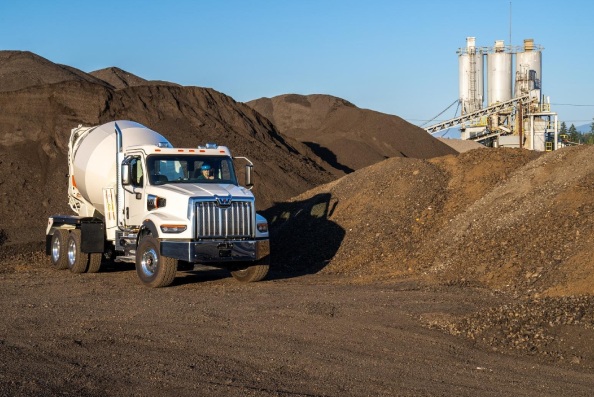
Concrete mixer transmissions operate in some of the most severe-duty conditions in vocational trucking. For fleet operators, construction contractors, and maintenance managers across Western Canada, transmission reliability directly impacts uptime, production schedules, and cost per hour of operation.
Understanding failure modes at a technical level allows for better maintenance planning, improved diagnostic accuracy, and reduced unscheduled downtime.
Operating Environment: Why Mixer Transmissions Fail
Concrete mixer applications impose a duty cycle that differs significantly from highway or general vocational use. Key stress factors include:
High-frequency start–stop operation under load
Continuous low-speed, high-torque operation during drum cycling
Extended idle periods during batching and pour operations
Severe ambient temperature variation typical of Western Canada
Shock loading from uneven aggregate distribution and drum dynamics
These conditions accelerate thermal loading, clutch wear, and lubricant degradation across transmission platforms.
Most Common Concrete Mixer Transmission Failures
Overheating Issues in Mixer Transmissions
Thermal overload remains the most common root cause of transmission degradation in mixer applications.
Typical contributing factors:
- Inadequate cooling capacity
- Blocked or damaged transmission coolers
- Extended idling during pours
- Heavy loads in urban or off-road environments
Prevention tip: Routine temperature monitoring and proactive cooling-system inspections are critical.
Premature Clutch Wear (Manual and Automated Systems)
Concrete mixers commonly experience premature clutch wear due to frequent shifting under load. This issue affects both manual and automated manual transmissions.
Common causes include:
- Aggressive stop-and-go driving
- Impropre clutch calibration
- Driver technique issues
- Operating outside recommended load ranges
Early symptoms include harsh shifts, delayed engagement, and reduced drivability. Addressing these concerns early through preventive transmission maintenance can help extend service life and lower repair costs.
DT12 note: Some concrete mixer applications are available with the DT12 vocational transmission, designed for severe-duty work cycles and improved shift performance under load.
Fluid Contamination and Internal Lubrication Failures
Concrete environments are hard on drivetrain sealing systems. Dust, moisture, and aggregate infiltration can contaminate transmission fluid, leading to:
- Bearing and gear wear
- Valve-body malfunctions
- Erratic shifting
- Internal corrosion
Fluid contamination often goes unnoticed until performance issues appear, making regular fluid analysis essential.
Prevention tip: Follow a strict transmission fluid service schedule and inspect seals during every major service interval.
Warning Signs Fleet Managers Should Not Ignore
Early detection can prevent minor issues from becoming catastrophic failures. Watch for:
- Persistent or rising sump temperatures under steady load
- Shift timing variability or gear hunting
- Audible drivetrain harmonics or vibration changes
- Fault codes related to clutch slip or pressure deviation
- Fluid discoloration, odor, or viscosity change
Addressing these signs early can dramatically reduce repair costs and vehicle downtime.
Why Working With an Authorized Dealer Matters
Concrete mixer transmissions require specialized knowledge, tooling, and software for proper diagnosis and repair. Working with an authorized dealer ensures:
- OEM-level diagnostic software and calibration capability
- Access to vocational-duty transmission programming
- Accurate duty cycle matching for clutch and shift logic
- Use of OEM-spec components for rebuild integrity
- Understanding of mixer-specific PTO and hydraulic integration impacts
RJames Management Group provides vocational transmission support across Western Canada, with a focus on mixer and severe-duty applications where uptime and durability are critical.
Key Takeaway for Fleet Operators
Concrete mixer transmissions are not failing randomly—they fail predictably under thermal, mechanical, and contamination stress patterns specific to their duty cycle.
Most failures can be mitigated through:
- Thermal management optimization
- Calibration and clutch adaptation control
- Fluid condition monitoring and proactive servicing
- Application-specific maintenance strategies
Vocational Transmission Support in Western Canada
For fleets experiencing recurring transmission issues or looking to reduce lifecycle costs through preventive diagnostics, RJames Management Group offers specialized vocational transmission expertise tailored to concrete mixer operations.